Saturday, June 5, 2010

No one else bet on him!

After Mary Cooney Coffey’s death, my Aunt Alice Flynn Burns reached out to her first cousin Evelyn. As a result, Evelyn traveled to New Hampshire to meet her Flynn relatives, with whom she fell hopelessly in love. She was too late to meet my grandmother, her Aunt Maggie, but others in the family told her wonderful stories. Jack and Julia, who raised three handsome sons, treated her as the daughter they never had, and bachelor Jim adored her, taking her to her first dog races and being astounded at tiny elfin Evelyn's enthusiasm for each "poor little doggie."

As mentioned earlier, I really did not know Evelyn. My brother says we met her in 1938, but I was too young to retain that memory. We had moved from Texas to Massachusetts for a year, and I was meeting all of my father’s family for the first time. So Evelyn, who would have been visiting there only a week, was not then a remarkable memory. (I am astonished as I write those words!)

Henry remembers going to the dog races with Evelyn, our father, and Uncle Jim. Henry was too young to be admitted, so Jim engaged the nearby Irish cop in lively conversation while Dad furtively tucked his little son under his top coat and sneaked him into the arena. (‘Tis no wonder Henry remembers this!)

Jim gave Evelyn a $2 bill to bet. She chose a dog with 30/1 odds and won! Jim said, “How on earth did you do that?” Her reply was, “He was so pathetic looking, and no one else was betting on him, so I did.”

Evelyn had learned from her mother how to shop sales and she applied this skill both at Filene’s Basement when she visited relatives in Boston and in local Cleveland stores. She was so tiny that her size clothing did not sell quickly, so she would wait as the price dropped each week and grab a true bargain at the last minute. In those days display shoes were in her size, too, and she made wonderful buys getting them on mark-down.

A devout Catholic, Evelyn sent beautiful religious Christmas cards to my parents, and in my child's mind she became a reclusive little nun-like figure. However, when the Texas Flynns met her in New England in 1949, I learned otherwise. I was totally enchanted by her. She loved to hit those sales at Filene's, had a charm and wit that was positively beguiling. My mother adored her, and Evelyn always spoke of how she loved Lettie.

In the 1960’s when he lived in Illinois, my brother went to Detroit to visit Evelyn on Warrington Street. He remembers an upstairs apartment in which every available surface was covered: a table filled with St. Christopher medals, a collection of seemingly valuable cylindrical wind-up music boxes tucked beneath another.

Many in our family are collectors, or maybe even hoarders, and we’ve always considered it a “Flynn affliction.” But now, one wonders if it came with our Coffey genes!


The poem below has nothing to do with the story above, but it does speak of Evelyn’s love of those whom others did not.


Ballad of a Dog


The bleakness of November sun

Speared scanty light across

A barren ranch, and shaggy winds

Distorted its pale gloss.


Trees crackled in sharp shadows and

The aged farm house flung

Its battered face into the void

That fallen leaves had hung.


An old, decrepit garden wept

For flowers that were gone,

And shrilled its pallid lonesomeness

Into the quiet dawn.


A path led to the river-bank,

And through its mud I sped

In search of a brave mother-dog

Whose litter’s grassy bed


Was loud with hungry cries. A thin,

Starved shape sprawled stiffly out

Upon the sand. The winter flu

Had put its life to rout.


I took the smallest puppy home

With me, and called her “Squeaks”

Because she made fond, squeaky sounds

For loving. All the weeks


Of puppyhood went by swift as

A day, and courage grew,

And loyalty, in Squeaks’ young heart.

Our love for her grew, too.


Grief visited our home and left

An aching memory,

And Squeaks, in puppies’ laughing way,

Made sorrowed hours flee


With bitten shoes and tattered hose

And curtains. I confess

It tried my mother’s patience much

To find things in a mess.

Soon, neighbors in a heartless kind

Of way decided Squeaks

Must leave. Her merry bark, they said,

Resounded like the creaks


Of rusty doors to one whose work

Made night of day, and day

Of night. I was not strong enough

To combat them, and they


Applauded their mean measure of

Success. I didn’t mind

Too much because Squeaks loved her new

Range home. Sleek forests lined


Its walls, and wood-life played with her.

I heard her laugh ring out

When birds chirruped – it was a life

More worthy of my scout.


Months passed in happiness until

A year had rolled around.

She brought nine sturdy sons into

The world. I watched them bound


In joy upon the floor of their

Small cabin – a handsome set

That soon were claimed by eager youth

Pursuing a new pet.

I saw Squeaks only twice since then,

And now they have told me

She wandered from the woods she loved

So well. How can it be?


Again a bleak November sun

Spears scanty light across

A barren ranch, with shaggy winds

Distorting its pale gloss.

The burlap of the kennel door

Is beating lonely taps

Upon its roof. A naked bone

Yawns lazily and naps.


Evelyn Coffey

Friday, June 4, 2010

Thanks to a Glorious Woman

From Evelyn’s January 1978 letter:

While Mama was working in the summertime, we went to a playground near our home and learned many wonderful arts and skills. Athletics of course were an important part of the program and when I was 10 I was declared champion of the City of Cleveland in all these areas. My nearest competitor was 14. Mama had to take me down to the newspaper that had the contest and they took many pictures which they couldn't use because Mama dressed me in my "best" dress - my First Communion dress, all white lace and ribbons. Wasn't that fun? However, they ran a good story and I held the championship for four years.

About that time the Municipal Dance Director of the City of Cleveland came to all the playgrounds looking for talent for a city pageant. She found Rose and me, much to our delight, and we had a wonderful free course in ballet. Like most little Irish kids, we had a keen sense of rhythm and a natural grace of movement, so she chose Rose to lead the pony ballet and me to do solo work with three professionals.

After it was over, she said she wanted to meet Mama because her two little girls had so much talent not to have it developed. She gave us both dancing lessons for the price of one, and she gave me her little sister's used toe slippers so that I could study that difficult field of dance.

We were in seventh heaven and appeared in many wonderful places (our first professional appearance was at the Keith 105th Street Theater that Bob Hope has made famous in his memoirs).

There was a city wide contest in ballet which I didn't even know I was participating in. But Miss Wheeler came to see Mama and told her I had won, and that I would receive a scholarship in dance at the best Russian School in New York, all expenses paid. Mama was hesitant to let me go, but Miss Wheeler, her mother and the pianist from our dancing school would all be going, so she consented. I made my debut that summer at the Waldorf-Astoria and saw many thrilling places and sights.

In 1955, one of my dancer friends and I gave three programs of my poetry in dance at the Astor Hotel and it was one of the most beautiful experiences I have had. My dancing teacher, Miss Wheeler, was there and the first poem I read was called "Dancing Teacher". Each verse celebrated a dance she had taught Rose and me, each set in its own rhythmic space, and she told me it moved many of the dancers in the audience to tears. I had it lettered for her, and her sister told me it was one of her proudest possessions.

I felt so lucky to be able to say a public thank you to this glorious woman whose interest changed our whole destiny.


Dancing Teacher

-

Thus shall she be remembered --only thus,

For I have ever seen her so, in song:


Dancing garden minuets,

Lovely of face,

All flowers and lace,

One, two, three, four,

Gentle Gentleman, adore!


In a tango mood,

Rose-petals splashing,

Castanets

Flashing--

Petals like blood.


Peasant girl stomping

In little Dutch shoes;

Peasant girls romping,

With a lover to choose!


Russian am I

While the Volga flows.

Russian I die,

Whom Destiny sows.


Art of Greece, heart of life,

Named of Menelaus' wife,

I remember her best, I think,

On the green-lit river brink,

Dusting velvet buds of willow,

Palm a pink-soft pillow,

A pool for bathing leaves.


Or is she now a faun who weaves,

Slim-footed through mire,

Swifter than fire,

Seeking the hermit-thrush?


A Melody--

A lullaby at evening, when the sun

Behind the dim horizon's brow

Has spun a long

Blue gossamer-sea,

And child-thoughts run

To a dream-ship's prow

And sandman's brush...


Thus shall she be remembered, -- only thus,

For I have ever seen her so, in song!


Evelyn Coffey


Profound thanks to "The Four of Us" for finding and typing this poem for me. What a precious gift!

Thursday, June 3, 2010

Mother Mary Love

Just months after their father’s death, Evelyn, Rose and their mother appear on the 1910 Census in Cleveland Ward 1, Cuyahoga Co, Ohio, living with the maternal grandmother Irene Cooney and several of Mary’s grown brothers. Irene had been born in Ireland and immigrated to the US in 1870.


Mary lived to see both her daughters graduate from St. Colman’s High School and enter adulthood.


By 1930 they were still in Cleveland but in a rented place they shared with a Czech family. Evelyn was working as a stenographer and Rose as a book keeper.


Again from the 1978 letter, Evelyn spoke of her mother:


I don't know the year of Mama's birth, but the day was March 18, and I celebrate it with love and thanksgiving.

She was a glorious creative human being and though her education was limited, she had a high artistic sense and a sublime sense of humor. I marvel at her courage and selflessness. I have been told by friends who knew her as a young woman that she was outstanding for the beauty of her costumes and won many awards for them (all of which she made herself).

When Rose and I came into being, she re-directed all her attention to us: she worked, among other ways, as a dress maker to provide us with every good thing. Many nights, I've been told, she bounced one of us on her knee as she pedaled the sewing machine.

We were always beautifully dressed. She shopped at the "best" stores on month-end, bought large coats, etc, and made them into two. I remember one such triumph: a shocking pink that she decorated with black plush, and Rose and I were old enough to enjoy the compliments we received everywhere we went.


When the mother died two years after Rose’s death, Evelyn was all alone in the world. She wrote at least two poems to her mother’s memory:


Hands of a Mother


Three things I notice in the shadows:

Death is upon her hands.

They are still and white:

But the gold of her wedding ring

Is alive and gleaming

Beneath the folded heart,

And the cross of her rosary is shining

Like a starry dart.

Three candles burn,

Sighing with a blue murmur.

Gone is the dear blood from her fingers,

But the work-darkened scars remain,


With the glow of love’s gold pattern

On her left hand

And the Sign of the Cross

On her right.

The ring is my cradle;

The Cross my tomb.

There in the flame-light lies my destiny,

Where death is.


Evelyn Coffey


Mother’s Picture


Her place is there . . . . .

She of silver hair . . . . .

Elevated in light,

In candlelight!

Touch the flowers

With orchid hours

For her to wear.

Spin pale lace

To frame her face;

Lay bare the wall.

Her place is there . . . . .

When shadows fall . . . . .

In candlelight!


Evelyn Coffey


Wednesday, June 2, 2010

I sang of a Rose ...

ROSE DOLORES COFFEY 1909 - 1934


Evelyn wrote of the little sister she so loved in a 1978 letter to my brother:


Rose was exceptionally beautiful - often she was stopped on the street to tell her so. She had much more common sense and true intelligence than I, and my greatest joy was to have her approve of me. She was so much more self-contained than I, and it took people longer to realize how wonderful she was.

I should also say that Rose had a beautiful singing voice. While at Cleveland College, we sang over the radio with the Glee Club, and her professor in accounting told Mama he had never had a more brilliant pupil.

When she died, the priest told all the young girls in the confessional about her, and her confessor told me Rose had been given her Heaven on a silver platter, but that I would have to work for mine.

The priest who gave the eulogy at her funeral (he was a cousin of St Therese of Lisieux) said we were "two bodies with one soul". He had known us all our lives.

After her death I was very unwell, and was told I would never run or dance again. It seems there was something wrong with my heart. When I came to Detroit, the doctors wouldn't give me "two cents" for my life. But Holy Communion has been my medicine, and I have lived here in Detroit a long and wonderful life.

Leaving Cleveland was a serious wrench because I was greatly loved and considered "special". At Cleveland College (Western Reserve University) the poets called me their little Emily Dickinson. At the time I didn't even know who she was; but Julia and Jack [Flynn] took me to Amherst and I have pressed flowers from her garden.

When Rose died our income was cut in two so I had to stop going to college. On the strength of a poem they had seen in the magazine "Skyline", the Ohio Poetry Society created their first scholarship for me. It was formally presented at a reception at the Statler Hotel - all silver and candles, and I was terrified of all the brilliant and distinguished people.

I read a poem called "The Rose " and a composer in the audience asked permission to set it to music. Eventually this same composer set a number of my things to music, and there are recordings of them around somewhere.


Rose died in 1934, breaking young Evelyn's heart forever. She expressed her love for this sister in an early poem,

The Rose Song.


The flower

is gone.


The dagger stem

in dark and dry distraught

clings aching to its earth,

watching

with a dark heart

her petals

skim heaven,

where sun is;

where dews fall;

where clouds float;

where birds wing.

High there

where only a prayer

can meet

again

the lovely rose,

she spills

her unspent sweet.

High there

where God is,


the flower is.


Evelyn Coffey


(This note accompanies one copy of this poem: This little poem is dedicated to my beautiful sister Rose, who died when she was 24. It has been recently set to music and was presented in concert at the Art Institute. In the poem, she is the flower; I the stem.)


Another poem, merely noted To my sister Rose, says


The winds

swept perfume to my lips

and I sang

of a rose.

April rains

flung their fragrance

upon my hair,

and the sunset

whirled its flagrant pool of pinks

into my eyes.

I know now

That they are all

God’s thoughts of you,

Spoken aloud.


Evelyn Coffey


Tuesday, June 1, 2010

A cousin's view of cousins


Evelyn had a way of seeing people and her world through fairy dust and magic. Nothing was ordinary with her and she delighted in everything.


In 1972 she wrote my brother:

Cousin is a lovely estate. And we are all cousins, so time and distance and the natural unsureness of the unknown can't touch us. Through no act of our own except being, we have received this gift.


[Cousins]George [Flynn] and Alice [Flynn Burns] and Rose and I corresponded briefly when we were children and we talked about and wondered about our exciting family in the East. [New Hampshire]


Imagine our bedazzlement one day many years later to receive an air mail letter from George. He was crossing country on his way to China, and wanted to meet his Cleveland cousins.


He was the first of our father's family to come into our lives. For Mama and Rose, he was the only one they had the delight of meeting. But what a first! We thought he was the most beautiful and wonderful person in the world. He had just come from being intercollegiate boxing champion of the world [MIT] and he showed us the engraved gold watch he had been awarded. With his bursting grin and Irish charm he devastated us.


Four years later he came again bringing with him Larry, his glamorous bride. We thought no one but Larry could possibly have been good enough for him.

It was my Mother's dream that I should know my father's people. I had friends in New York and visited them every summer and your darling Aunt Alice [Flynn Burns] invited me to Nashua for two days on my eastern trip in 1938.

George had paved a royal way for me. He called Rose and me the "two little peaches" and I walked into a George-made world. Alice and Ralph and mother Burns found me at South Station. It was one of the sublime moments of my life.

Alice took me everywhere, to Lynn where I met Mamie [Flynn Guerin] and Agnes [Mamie's daughter] and to Lowell first to meet Elizabeth [Flynn Sullivan] and then to Julia and Johnny's [Flynn]. The only one I had heard of was Elizabeth: she had sent me many beautiful gifts when I was a baby.

With Julia and Johnny [Julia's son] it was instant and undying love. All I remember of their house was the picture of "The Boy with the Torn Hat", but oh, their faces and their welcome.

Julia wrote to Jack [her husband], who was working in New York at the time, and said his cousin Evelyn had been there and would be visiting in Jackson Heights. This glorious man, tired after a rough day's work and in pouring rain, combed the area trying to find me. This too I shall never forget.

Alice told me many lovely and interesting and sad things about the family. Her mother had died in April of that year [25 Apr 1937], so I was just too late to meet your grandmother.

Alice worshiped your father with a total dedication. As I remember the story, he bought her her First Communion dress and paid her tuition at the business college and I'm sure provided his beautiful little sister with many luxuries she would not otherwise have had.

So your father was introduced to me through the loving eyes of your Aunt Alice, and of course I remembered him for what he was, and was really in awe of him. But I met him twice, and he dispelled my shyness with immediate grace. Surely he was someone to be proud of!

Each member of the family is unique and infinitely loveable. They were all of superior intelligence, marvelously endowed and aware - even those with limited formal education could take a high place any place anywhere.

Each one deserves a volume, but I mustn't wear you out. I will say about Jim [Flynn] that no one could have been dearer or more generous. He loved Massachusetts and New Hampshire. He knew all the secret woodsy roads and he showed me places that even Thoreau might not have uncovered. He had a special feeling for the old grave yards and he knew the history and the "guts" behind the heroic people who lay there. He would stand over a plague-ridden doctor's grave, for instance, and with the tears running down his face would say, "God, Evelyn, that was a man!"

The women were all spectacular. They combined the tenderness and compassion of the true woman with the daring and brute accomplishment of the pioneer man.

Margaret [Flynn] Harley is the historian of the family. She is living in New York with Phyllis [her daughter]. Undoubtedly you have her address. She is a deep student and was young enough and old enough to sense the mystical qualities of her mother and to be interested enough to preserve tid bits of information about Uncle Dan [Coffey] and others who died before I came upon the scene. Her life has been so steeped in tragedy that a lesser person would have given up long ago. One of her hobbies is collecting the poems that are cut into ancient tombstones.

There are no words to tell you how wonderful Julia and Jack have been - not just to their family, but to all the god forsaken little people who fell in desolation on their doorstep. They are the Great Lovers.

Oh, Henry, you can be very grateful God sent you into such a family. Their like will not be seen again. It was a special blessing to me to have come to know them all, to love them beyond time, and to try to live up to them.


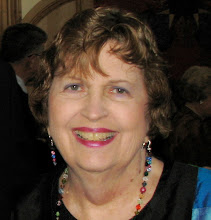
The above photograph is the only one I have of Evelyn. I have no idea when it was taken. It struck me that I used to wear my braids in the exact same way, and our Aunt Alice wore braids wrapped about her head into her old age.